
Sankranti marks the sun's transition into Capricorn, celebrated across India with harvest festivals, sacred rituals, and family gatherings. Send invitations for puja ceremonies, community celebrations, and festive meals.
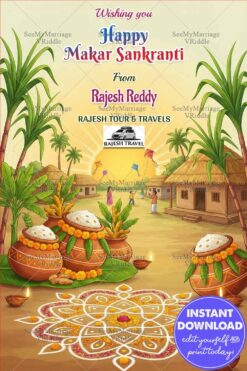

About Sankranti
Sankranti is a solar festival observed when the sun enters the zodiac sign of Makara (Capricorn), typically on January 14th. It coincides with the end of the winter harvest season and is celebrated with regional variations across India. The festival involves rituals of thanksgiving, family gatherings, and communal meals. Invitations for Sankranti events must include the date, time, location, and nature of the gathering—whether it's a temple puja, a community Pongal celebration, a harvest feast, or a family get-together. Key customs include offering new harvest grains, lighting lamps (vilakku), worshipping cattle, exchanging sugarcane and jaggery, and preparing traditional dishes. Regional celebrations include Pongal (Tamil Nadu and Andhra Pradesh), Makar Sankranti (North India), Makara Vilakku (Kerala), and Lohri (Punjab). Many families organize pujas dedicated to Lord Ayyappa, Lord Surya, or other deities. Invitations should clearly state whether attendance is for a religious ceremony, festive meal, or community event.
Cultural context
Sankranti celebrates the harvest season and the sun's auspicious transition. It is observed across Hindu, Sikh, and secular communities in India. The festival emphasizes gratitude for the harvest, renewal, and family bonds. Sacred cattle are revered as symbols of prosperity and livelihood. Lamps, new grains, and sugarcane are traditional offerings. In Kerala, Makara Vilakku (the star) is observed at the Sabarimala temple with major religious significance.
Also known as
Pongal (Tamil) · Makar Sankranti (Hindi) · Makara Vilakku (Malayalam) · Lohri (Punjabi)