
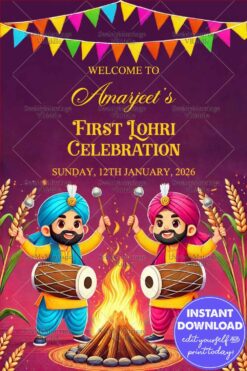
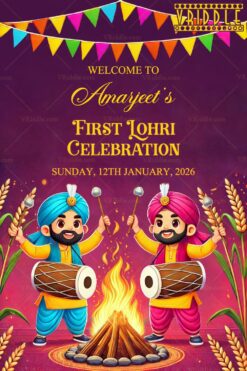
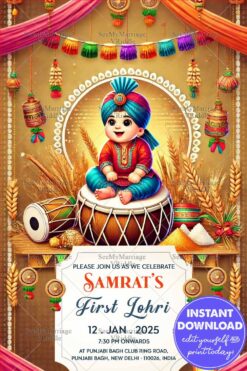
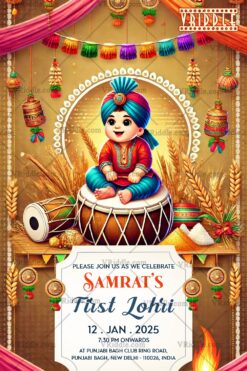
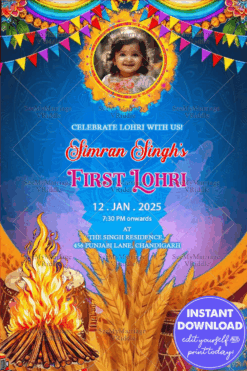
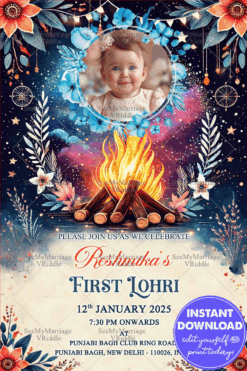
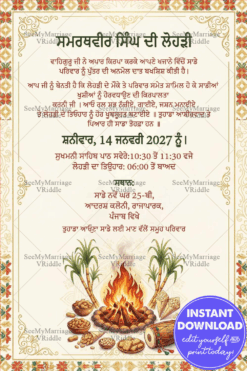
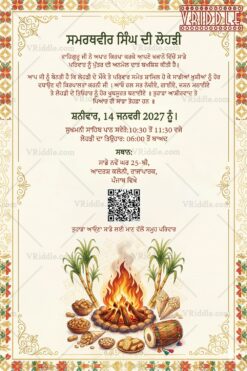
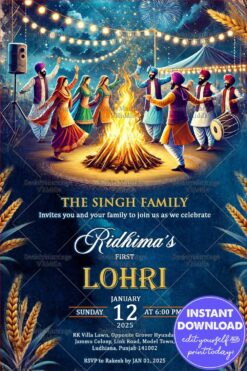
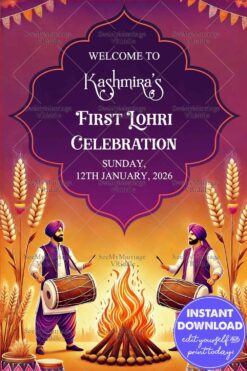
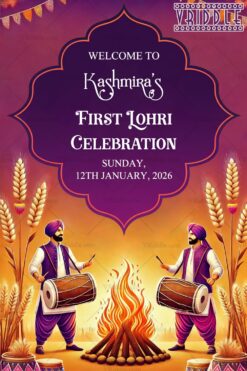
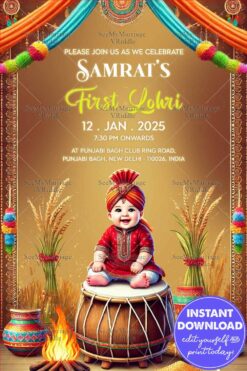
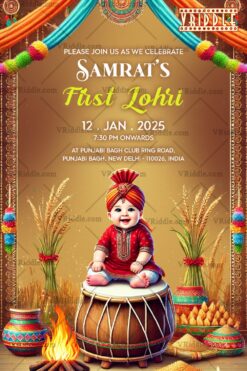
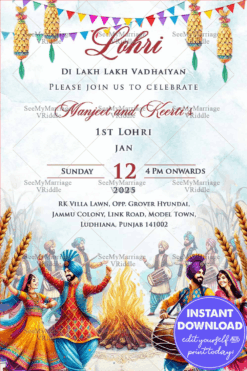
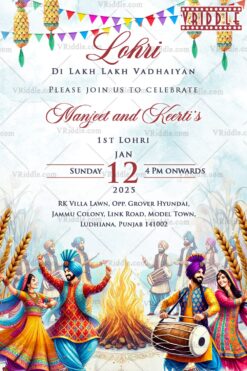
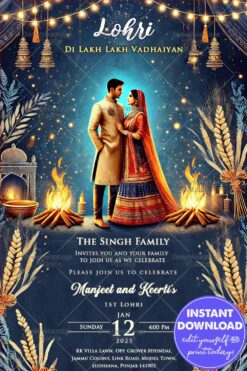
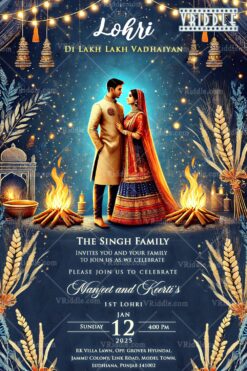
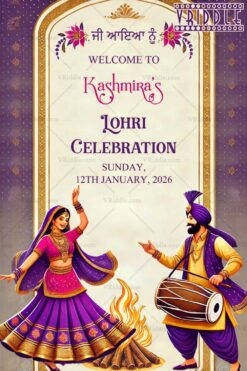
Lohri is a winter harvest festival celebrated primarily in Punjab on January 13th. Invitations announce family gatherings, bonfires, and traditional feasts marking the end of winter.
Makar Sankranti





About Lohri
Lohri marks the harvest season and the end of winter in Punjab and parts of North India, celebrated on January 13th each year. The festival centers on a communal bonfire (lohri) around which families and neighbors gather to sing, dance, and share sweets and snacks. Invitations must include the date, time, and location of the bonfire gathering or family event. First Lohri celebrations—a child's first Lohri after birth—are particularly significant and often involve extended family. Traditional elements include dhol drumming, gidda and bhangra dancing, kite flying, and the distribution of rewri (peanut brittle) and gur (jaggery). The festival has strong agricultural roots, celebrating the successful rabi harvest. Invitations may also announce related events like Makar Sankranti (the solar event on the same date) or post-bonfire meals. Regional variations exist: in Haryana and Himachal Pradesh, similar harvest festivals are observed with slightly different customs.
Cultural context
Lohri is a Punjabi Hindu and Sikh festival with deep agricultural and seasonal significance. The bonfire ritual is central—families gather around fires to offer prayers for prosperity and good harvest. Traditionally associated with the end of the winter solstice period and the brightening of days. The festival predates major religions in the region and is observed across communities in Punjab.
Also known as
Makar Sankranti (Hindi/Sanskrit)