
Oti Bharan is a Kannada pre-natal blessing ceremony where family and friends celebrate the expectant mother. Held during the sixth or seventh month of pregnancy, it marks the transition to motherhood with rituals, gifts, and communal joy.













About Oti Bharan
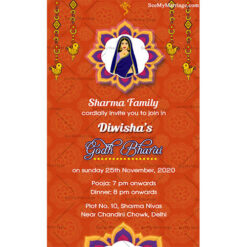
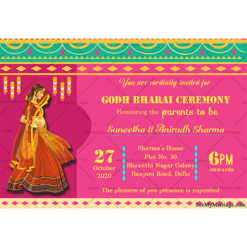
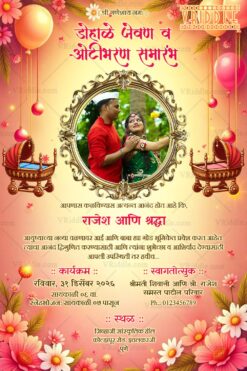
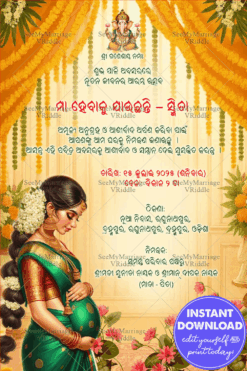
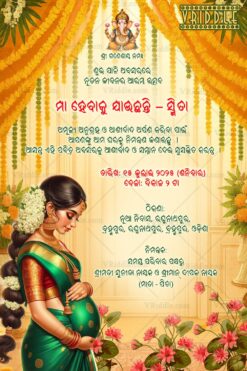
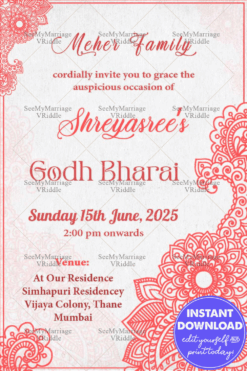
Oti Bharan is a traditional Kannada ceremony honoring the pregnant woman before childbirth, typically held in the sixth or seventh month of pregnancy. The word 'oti' refers to the saree or cloth gifted to the mother-to-be; 'bharan' means to wear or adorn. During this ritual, female relatives and friends gather to dress the expectant mother in new clothes, apply henna, present gifts, and offer blessings for a safe delivery and healthy child. The ceremony includes songs, music, and feasting. An Oti Bharan invitation must clearly state the date, time, venue, the name of the expectant mother, and whether specific gifts (clothing, jewelry, household items) are expected. Invitations often feature auspicious motifs like marigolds, peacocks, lotus flowers, and traditional Kannada design elements. Similar ceremonies exist across India under different names: Seemantham (Telugu), Seemanth Sanskar (Hindi), Godh Bharai (Hindi/Marathi), Valaikappu (Malayalam), Dohale Jevan (Marathi), and Gurbini Kappad (Punjabi).
Cultural context
Oti Bharan is rooted in Hindu traditions that mark significant life transitions. The ceremony acknowledges the physical and emotional changes of pregnancy while invoking blessings from family elders and the community. It strengthens bonds between women across generations and celebrates the soon-to-arrive child. The ritual is particularly prominent in Karnataka and among Kannada-speaking communities.
Also known as
Seemantham (Telugu) · Seemanth Sanskar (Hindi) · Godh Bharai (Hindi/Marathi) · Valaikappu (Malayalam) · Dohale Jevan (Marathi) · Gurbini Kappad (Punjabi)