
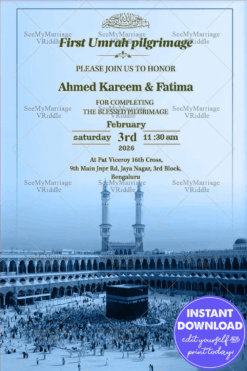
Hajj is the Islamic pilgrimage to Mecca, one of the Five Pillars of Islam. Invitations announce a family member's journey and invite prayers and blessings for their spiritual voyage.







About Hajj
Hajj is the annual Islamic pilgrimage to Mecca, Saudi Arabia, undertaken by Muslims who are physically and financially able. It occurs during Dhul-Hijjah, the 12th month of the Islamic lunar calendar. Performing Hajj is one of the Five Pillars of Islam and represents a profound spiritual commitment. Hajj invitations typically announce a family member's departure, request community prayers and duas (supplications) for their safe journey and acceptance, and may invite guests to farewell gatherings. The invitation should include travel dates, the pilgrim's name, and requests for spiritual support. Umrah, a lesser pilgrimage that can be performed year-round, is often announced similarly. Both occasions hold deep religious significance in Islamic tradition, bringing families together to celebrate and spiritually support the pilgrim's journey.
Cultural context
Hajj is a central pillar of Islamic faith, performed by approximately two million Muslims annually. The pilgrimage commemorates Prophet Abraham's obedience to God and includes rituals at the Kaaba (the cube-shaped structure at the center of Masjid al-Haram), Mount Arafat, and Mina. Families traditionally gather to bid farewell to the pilgrim, offer duas for their spiritual journey, and celebrate their return. The occasion reinforces community bonds and Islamic identity.