
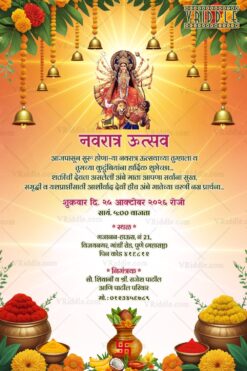
Dussehra marks the triumph of good over evil. Send invitations for Golu gatherings, Garba nights, Dandiya dances, and festive family celebrations across India's diverse Navratri traditions.
About Dussehra
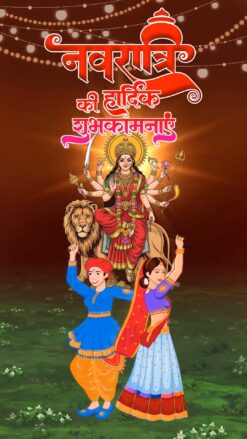
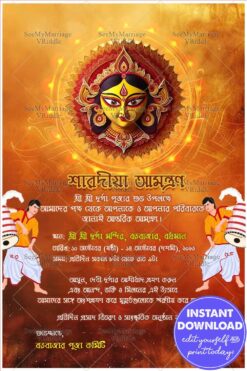
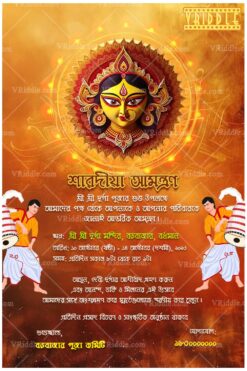
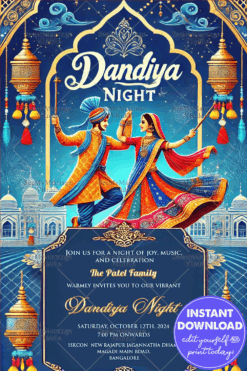
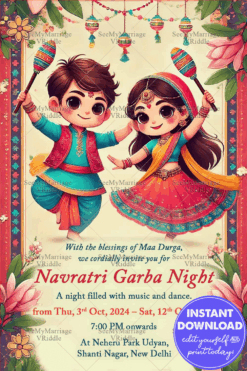
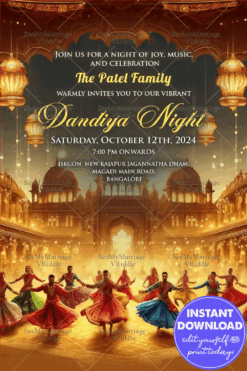
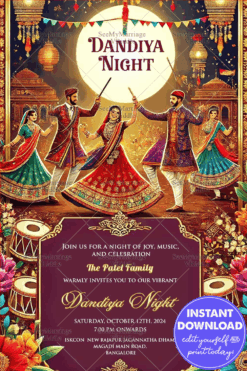
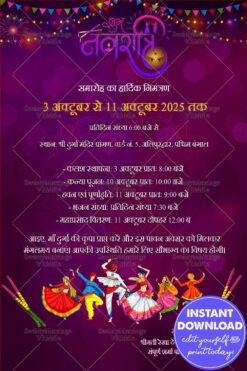
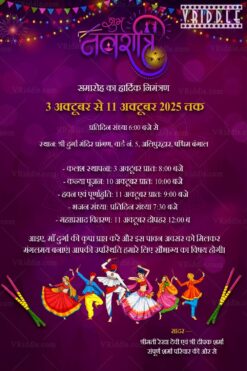
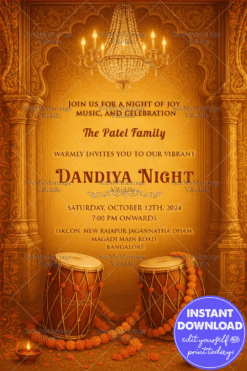
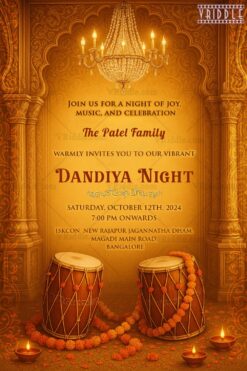
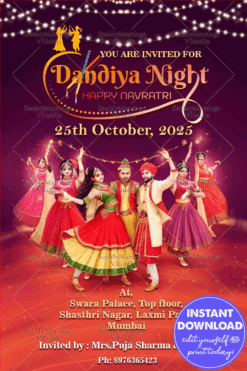
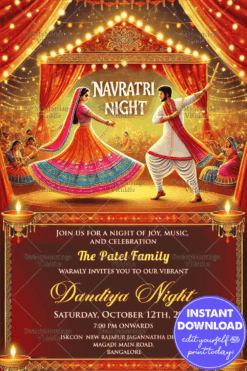
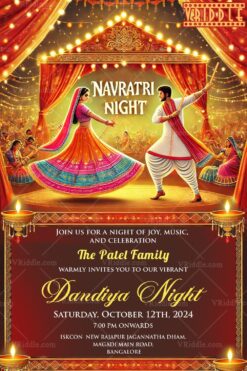
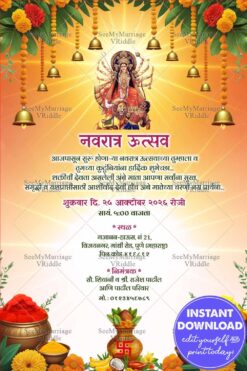
Dussehra (also called Dasara or Vijayadashami) is celebrated across India to commemorate the victory of Goddess Durga over the buffalo demon Mahishasura, and Lord Rama's victory over Ravana. The festival spans nine days of Navratri, culminating in Dussehra on the tenth day. Celebrations vary by region: in South India, families set up Golu (tiered displays of dolls) and invite neighbors for viewing; in Gujarat, Garba and Dandiya Raas (circle dances) are central; in North India, Ramlila performances and effigy-burning mark the occasion. An invitation must specify the event type (Golu viewing, Garba night, community feast, prayer gathering), date, time, venue, and dress code. Many households also observe Mata Ki Chowki—devotional singing gatherings dedicated to the Goddess—during this period. Whether formal family functions or casual dance events, invitations should reflect the regional tradition and festive mood.
Cultural context
Dussehra is rooted in Hindu mythology celebrating the divine feminine (Shakti) and the eternal battle between dharma (righteousness) and adharma (chaos). Goddess Durga, Lakshmi, and Saraswati are worshipped during Navratri. The festival emphasizes family bonding, community participation, and spiritual renewal. Regional practices include Golu (South), Garba/Dandiya (Gujarat), Ramlila (North), and Bommala Kolu (Andhra Pradesh).