
Qawali Night: A musical gathering rooted in Sufi devotional tradition. Invite guests to an evening of soulful performances, spiritual poetry, and communal listening.

About Qawali night
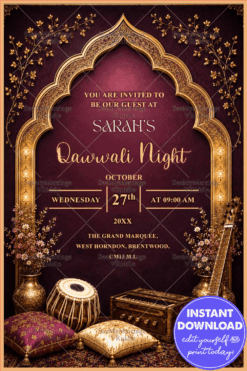
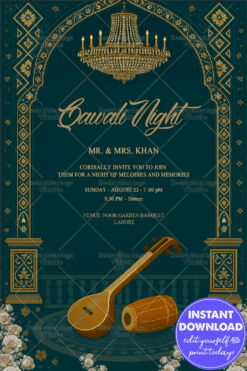
Qawali is a form of Sufi devotional music performed in South Asia, particularly in Pakistan and India. A Qawali Night is a social gathering centered on live qawali performances, where a qawwali group (typically led by a lead vocalist supported by harmonists and musicians) performs devotional and romantic verses set to classical raags. The event emphasizes participation and emotional response from the audience, who may clap, sway, or vocalize encouragement. Invitations should include the date, time, venue, and names of performing qawwals or groups if known. Mention whether the event is open to all or invitation-only, and note any dress code (often semi-formal or traditional). Qawali Nights range from intimate home gatherings to large concert-style events in auditoriums or community spaces. They may be organized for cultural appreciation, Sufi festivals, or as fundraising events. The atmosphere is reverent yet celebratory, blending spirituality with social connection.
Cultural context
Qawali originated in 13th-century Sufi circles in Persia and developed distinctively in South Asia. It is performed as an act of spiritual devotion within Islamic tradition, though modern Qawali Nights often serve secular cultural purposes. The music uses classical instruments (harmonium, tabla, dholak) and emphasizes repetition, call-and-response, and rhythmic intensity to induce spiritual states in performers and listeners. Major qawwali families and gharanas (schools) have shaped the tradition for centuries.