
Munj celebrates a boy's transition to student life through sacred thread ceremony. Invitations announce the ritual date, host family, and venue for this important Hindu rite of passage.
Upanayan
Janoi
Upanayanam
Janivara Samarambha
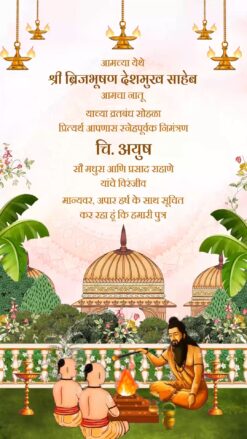
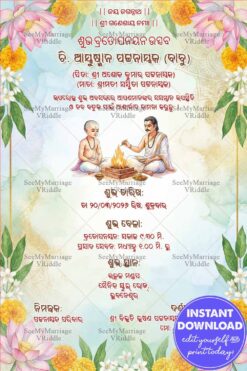
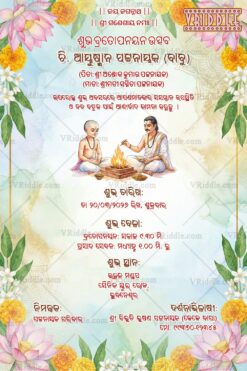
About Munj
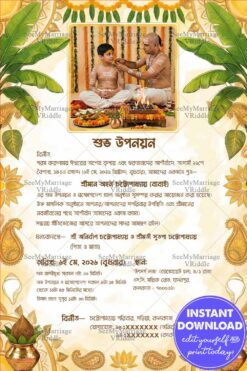
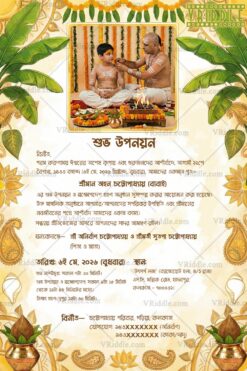
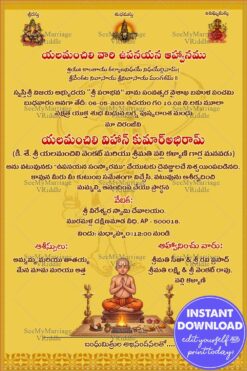
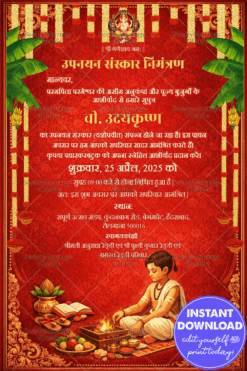
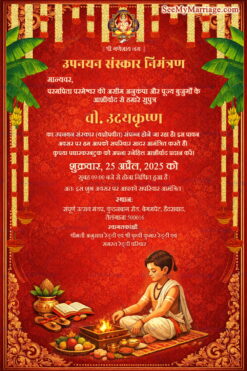
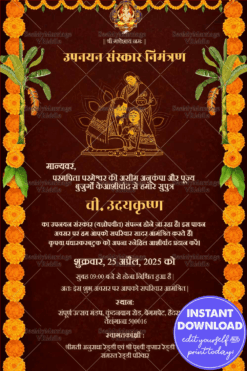
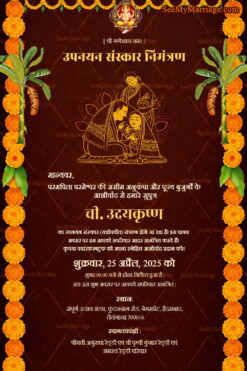
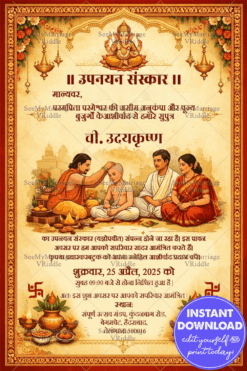
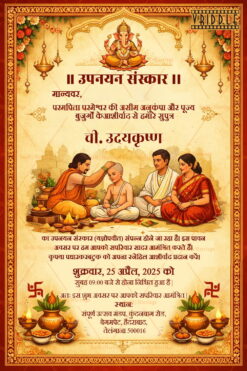
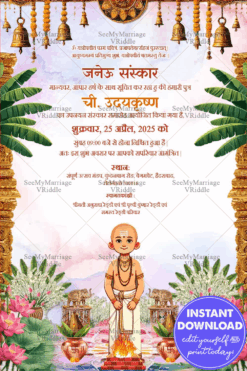
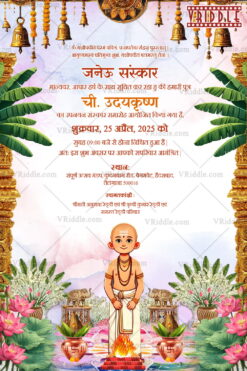
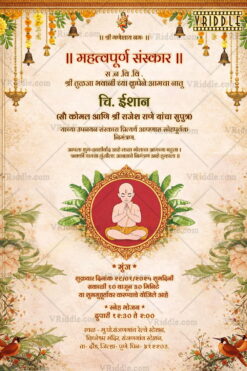
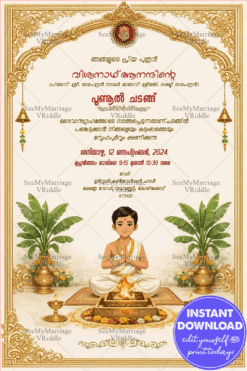
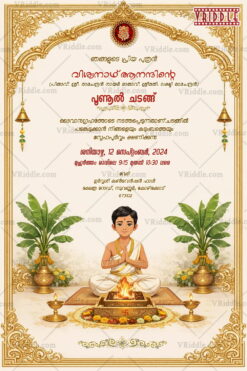
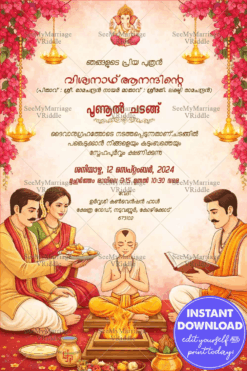
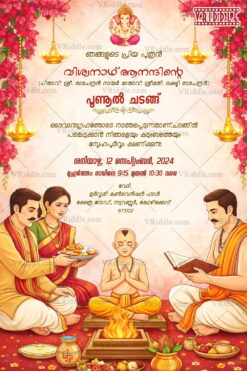
Munj (also called Upanayan or Janoi) is a Hindu life-stage ritual marking a boy's initiation into formal education and spiritual learning. The ceremony involves the sacred thread (yajñopavit) being tied by a priest, symbolizing the boy's new status as a student (brahmachari). The ritual typically includes a havan (fire ceremony), blessings from elders and priests, and a feast. Invitations must clearly state the boy's name, date and time of the ceremony, venue, and the priest's name if known. Regional variations exist: in North India it is often called Upanayan or Munj; in South India, Upanayanam or Janivara Samarambha. The ceremony is traditionally performed between ages 5–16, though timing varies by family custom and region. Invitations often feature images of the sacred thread, ritual fire, Lord Ganesha, temple elements, or banana leaves (used in South Indian versions). Host families typically invite close relatives, community members, and the boy's teachers.
Cultural context
Munj is one of the Samskaras (sacraments) in Hindu tradition, marking the second birth or spiritual initiation. It represents the boy's readiness to engage with Vedic knowledge and spiritual discipline. The ceremony is traditionally a Brahminical rite, though practice varies across communities. The sacred thread worn afterward is a visible symbol of the student's commitment to learning and dharma.
Also known as
Upanayan (Sanskrit / Hindi) · Janoi (Hindi) · Upanayanam (Kannada / Tamil / Telugu) · Janivara Samarambha (Kannada)