
Maha Shivratri marks the night of Lord Shiva's cosmic dance. Send invitations for home pujas, temple gatherings, and community prayer vigils during this major Hindu observance.
About Maha Shivratri
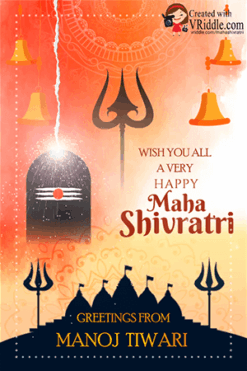
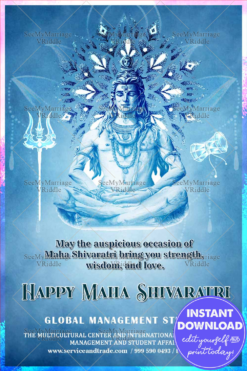
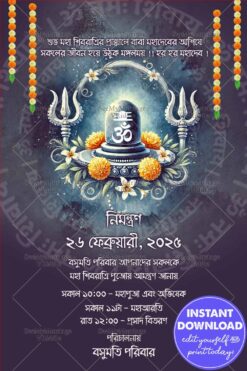
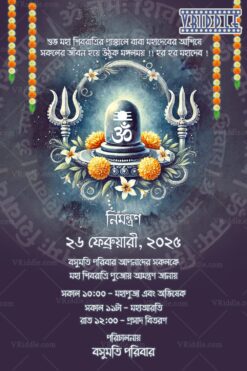
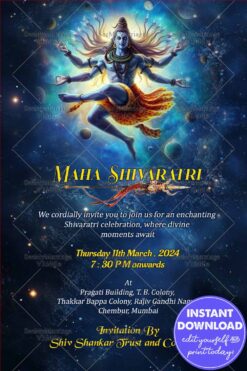
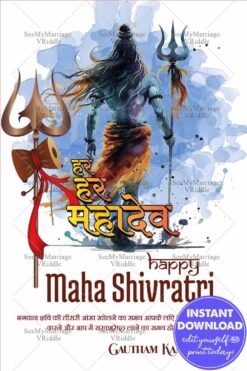
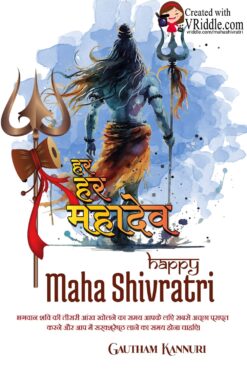
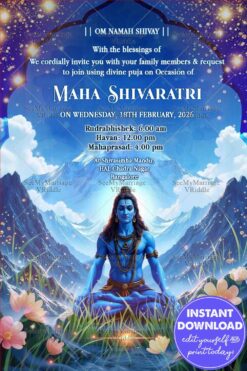
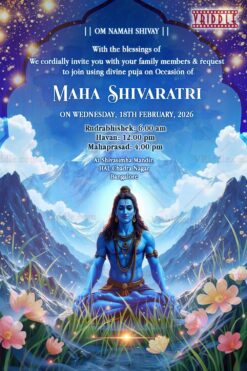
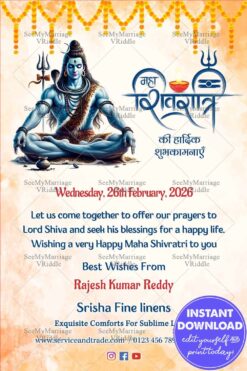
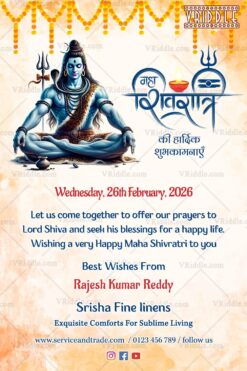
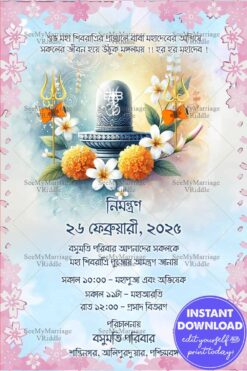
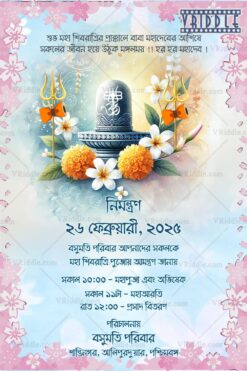
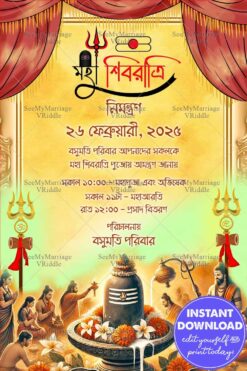
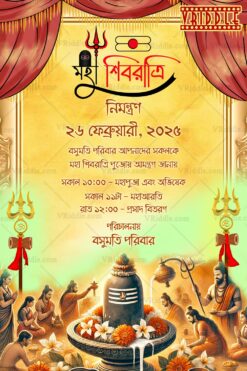
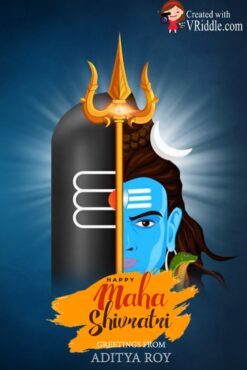
Maha Shivratri ('the great night of Shiva') falls on the new moon in the Hindu month of Phalguna (Feb–Mar). Devotees stay awake through the night to worship Lord Shiva, believed to have performed the cosmic tandava (dance) on this night. Invitations must communicate the date, time (vigil typically runs midnight to dawn), venue (home, temple, or community hall), and the ritual being observed—whether a puja (prayer ceremony), abhishek (ritualistic bathing of the Shiva lingam), or collective meditation. Dress code, fasting details, and offerings (flowers, milk, bilva leaves, fruits) are often included. Regional observances vary: some communities emphasize all-night chanting and drum-playing; others focus on silent meditation or group singing of Shiva mantras. Invitations may reference Shiva-Parvati mythology or feature the lingam, trishul (trident), or om symbol.
Cultural context
Maha Shivratri is one of Hinduism's most significant festivals, honoring Lord Shiva as the supreme being and destroyer of ego. The night is considered spiritually potent, and many practitioners observe fasting and sleep deprivation as forms of devotion. The festival celebrates Shiva's cosmic dance and his wedding to goddess Parvati. Temples and homes become centers of prayer, with offerings of flowers, incense, and sacred milk.