
Holika Dahan is the bonfire ritual on the eve of Holi, celebrating the triumph of good over evil. Send invitations that honor this sacred night of fire, prayers, and gathering.
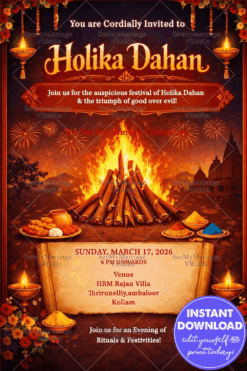





About Holika Dahan
Holika Dahan, also called Choti Holi or Holika Puja, is observed on the full moon night (Phalgun Purnima) before the festival of Holi. Families and communities gather around bonfires to burn wood, crops, and dried dung cakes while chanting prayers and singing devotional songs. The ritual symbolizes the destruction of evil and the welcoming of spring's harvest. An invitation must clearly state the date (lunar calendar-based, varies yearly), exact time the bonfire will be lit, and the gathering location—whether it's a home courtyard, community ground, or temple premises. Mention if attendees should bring offerings like wood or grains, or if refreshments will be served. Many regions celebrate with sweets like gujhiya prepared beforehand. Holika Dahan is typically a family-centered event held in the evening, though in some areas it extends into the night. The next morning marks the color-throwing celebration of Holi itself.
Cultural context
Holika Dahan roots in Hindu mythology and the story of Prahlad and the demoness Holika. It is observed across India with regional variations in rituals and timing. The bonfire represents purification, prosperity, and the victory of devotion and righteousness. Communities bond over the fire, share stories, and prepare for the spring harvest festival.