
Holi celebrates the arrival of spring and the triumph of good over evil. Send video invitations and greetings for your Holi gathering—specify date, location, and festivities like color play and feasts.





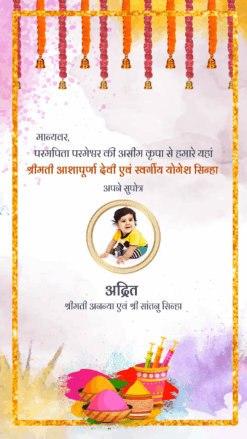
About Holi
Holi, the Festival of Colors, is observed in spring (March–April) across India and by Hindu communities worldwide. The occasion marks the end of winter, the start of the harvest season, and commemorates the legend of Hiranyakashyap and Prahlad. Holi gatherings bring family and friends together for color play (gulal), water balloons (pichkaris), bonfires (Holika Dahan the night before), sweets, and feasts. An invitation must state the date, time, and venue. Include whether the celebration centers on color play, a formal meal, or both. Mention any dress code or cultural elements (e.g., traditional attire). Regional variations exist: in North India, Holika Dahan precedes the main day; in South India, the bonfire ritual may differ in emphasis or name. Some communities prepare specific sweets like gujhiya or malpua. Corporate Holi events often simplify the ritual aspects and focus on team gathering and festive meals.
Cultural context
Holi originates in Hindu tradition and carries mythological significance tied to Lord Krishna and the gopis, as well as the story of Prahlad's devotion. The festival embodies themes of renewal, forgiveness, and the victory of dharma (righteousness) over adharma (evil). Holika Dahan, the bonfire ritual on the eve of Holi, involves burning dried wood and crops to signify purification. The main day is marked by playful color throwing, feasting, and social bonding across caste and class boundaries.