
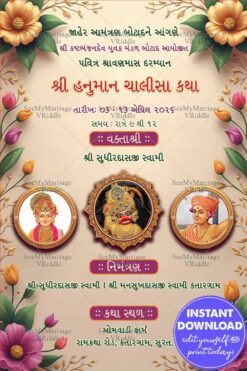
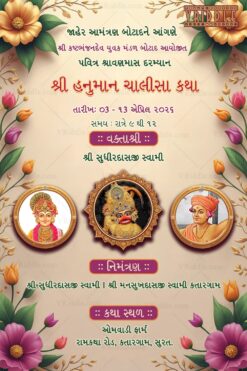
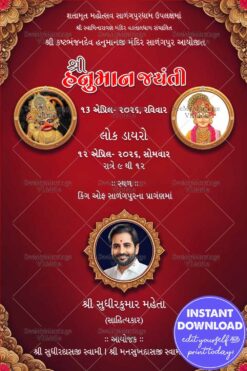
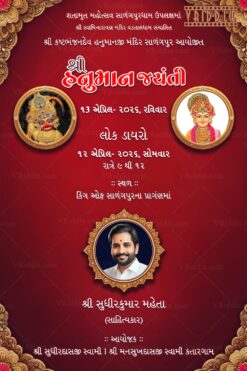
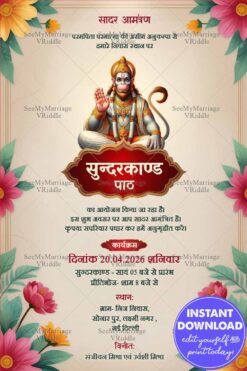
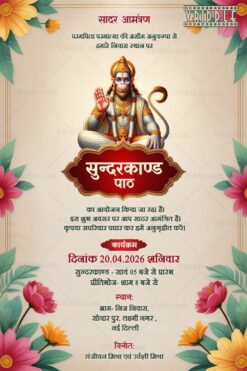
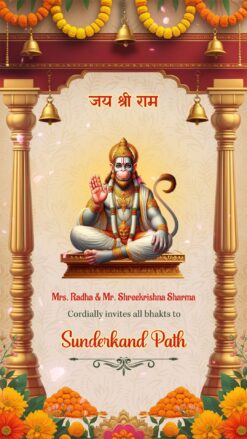
Hanuman Jayanthi celebrates the birth of Lord Hanuman, the monkey deity of courage, strength and devotion in Hindu tradition. Send invitations for temple prayers, Sunderkand recitations and family gatherings.


About Hanuman Jayanthi
Hanuman Jayanthi marks the birth anniversary of Lord Hanuman, revered in Hindu tradition as a symbol of courage, loyalty and unwavering devotion. The occasion is observed on the full moon day (Purnima) of the Hindu month Chaitra, typically in March or April. Celebrations centre on temple visits, recitation of the Sunderkand (a section of the Ramayana), group prayers and devotional songs. An invitation should include the date, time and venue of the prayer gathering or Sunderkand path (recitation event), the name of the hosting family or temple, and any special rituals planned. Regional traditions vary: in North India, the festival emphasises strength and martial virtues; in South India, temple processions and offerings of jaggery and peanuts are common. In Gujarat and other Western regions, fairs and community gatherings are popular. Families often invite relatives and community members to participate in collective worship and share a meal of sanctified food (prasad).
Cultural context
Hanuman Jayanthi is celebrated across Hindu communities in India and the diaspora. Hanuman is worshipped as the devoted follower of Lord Rama and represents courage, loyalty and celibacy. The Sunderkand, a 500-verse poem from the Ramayana, is recited by devotees seeking protection and strength. Celebrations include temple worship, ritual offerings of flowers and food, chanting of mantras, and communal feasts. The occasion carries spiritual significance for many households.