
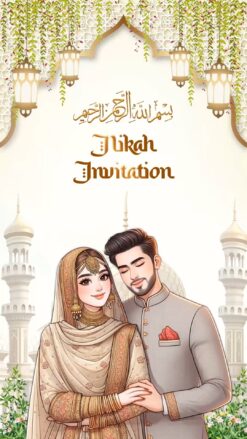
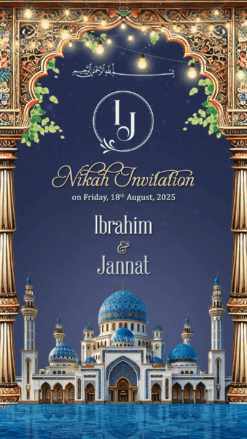
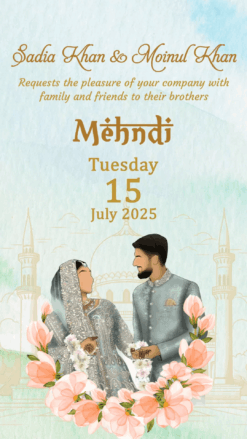
Nikkah is the Islamic marriage contract ceremony where a couple formally enters into matrimony. Invitations must announce the date, time, venue, and wedding hosts, and may include reception details.





About Nikkah
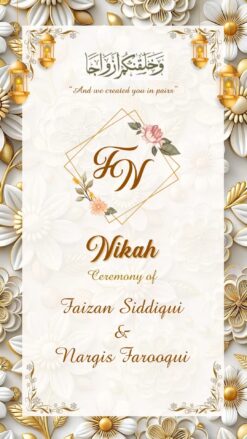
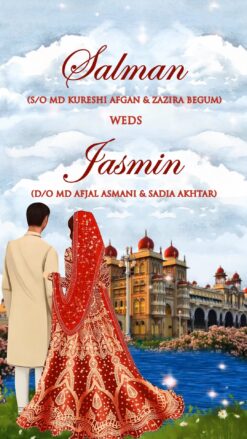
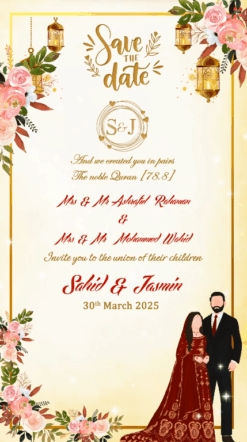
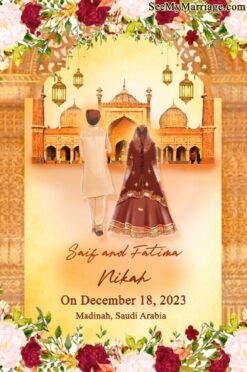
Nikkah is the Islamic marriage contract signed in the presence of witnesses, typically held before or concurrent with the Walima reception feast. The ceremony is brief and formal, often conducted by an Imam or religious scholar who witnesses the couple's consent. Invitations should clearly state the nikkah date and time, venue (often a mosque, community center, or home), names of the bride and groom, and the names of parents or guardians hosting the event. Many nikkah invitations also include reception details, as the Walima—the celebratory feast—frequently follows on the same day or later. The invitation may mention whether it is a women-only, men-only, or mixed-gender gathering, as some families observe gender-separated celebrations. Regional and family customs vary widely across Muslim communities in India, the Middle East, South Asia, and diaspora communities; some nikkah events are intimate with immediate family only, while others are large public celebrations. Dress codes, timing relative to prayer times, and venue setup should be clear on the invitation.
Cultural context
Nikkah is a core Islamic ritual rooted in the Qur'an and Sunnah, establishing a legal and spiritual bond between two people. It requires the consent of both bride and groom, a guardian (wali) for the bride, two witnesses, and an agreed-upon dower (mahr). The ceremony is distinct from civil marriage and is recognized in Islamic law across all schools of jurisprudence.