
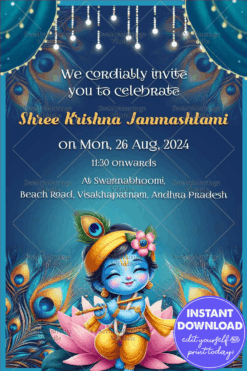
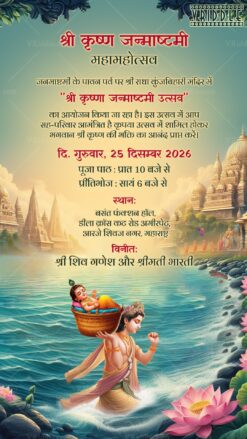
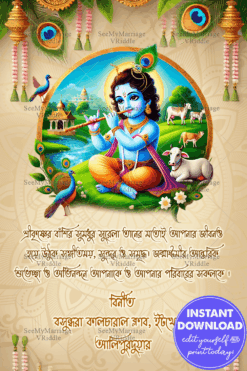
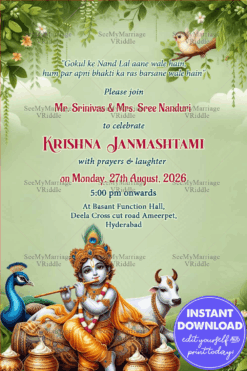
Krishna Janmashtami celebrates the birth of Lord Krishna. Send invitations for home pujas, temple events, cultural programs, and family gatherings held on this sacred Hindu occasion.
Gokulashtami
Dahi Handi
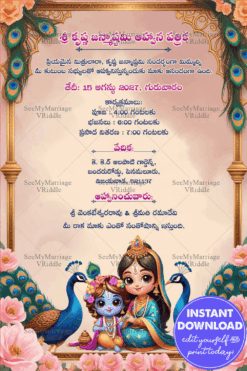
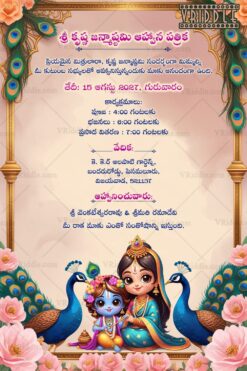
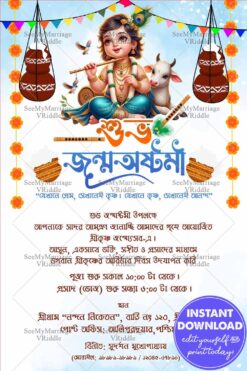
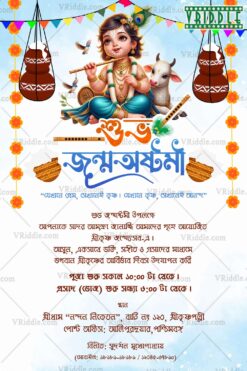
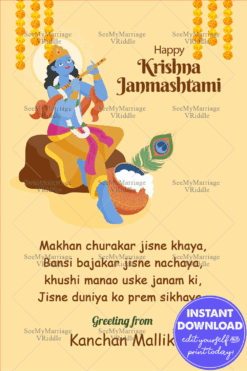
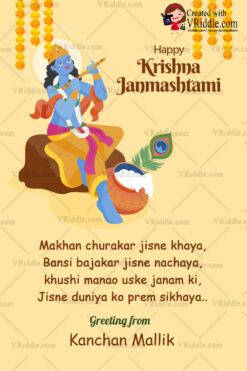
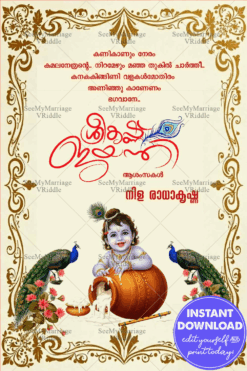
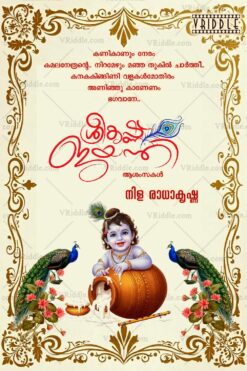

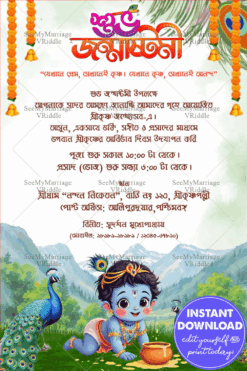
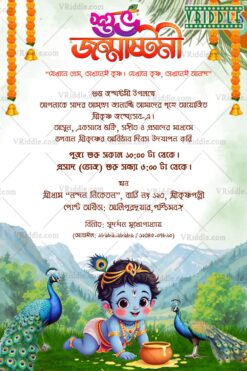
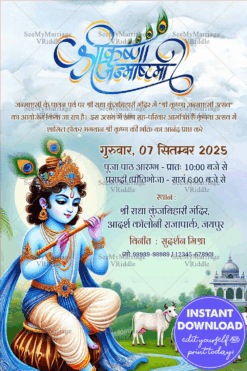
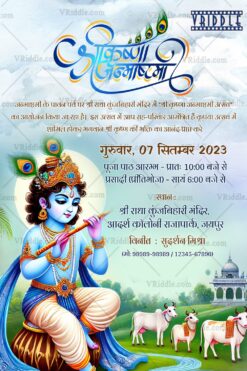
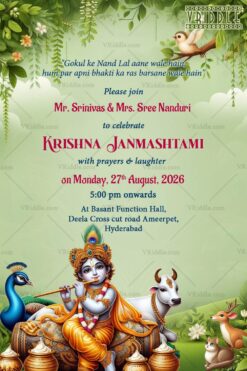
About Krishna Janmashtami
Krishna Janmashtami marks the birth of Lord Krishna, observed on the eighth day (Ashtami) of the dark fortnight in the Hindu month of Bhadrapada, typically August or September. Devotees fast, sing devotional songs (bhajans), and conduct prayers at home or in temples. Many families organize Dahi Handi events where groups attempt to break a pot of butter hung high above, enacting Krishna's childhood mischief. Celebrations include baby Krishna idol worship, midnight pujas, distribution of prasad (blessed food), and cultural programs with dance and music. Invitations must state the date, time (pujas often occur at night), venue (home, temple, or community center), and the nature of the event—whether it's a private family puja, community celebration, or cultural performance. Regional traditions vary: in Maharashtra, Dahi Handi competitions are central; in South India, homes display Krishna idols and prepare traditional sweets. Some families also celebrate Gokulashtami (Krishna's birth in Gokul) as part of the occasion.
Cultural context
Krishna Janmashtami is one of the most significant festivals in Hinduism, celebrating the birth of Krishna—an avatar of Vishnu and a central figure in Hindu philosophy, devotional practice, and epic literature. The festival emphasizes Krishna's divine play (leela), his childhood exploits, and his teachings. Traditionally observed with fasting, night vigils, idol worship, and community feasting, it unites families and devotees across India and the diaspora.
Also known as
Gokulashtami (Telugu/Kannada) · Dahi Handi (Marathi)