
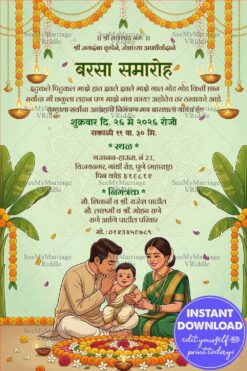
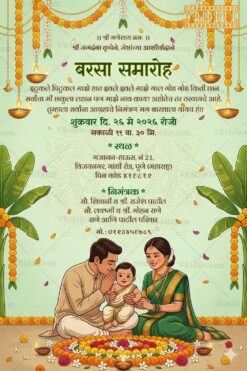
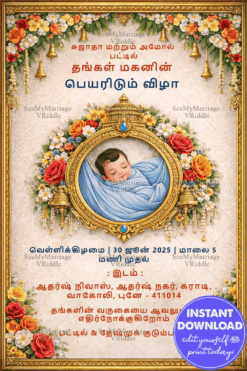
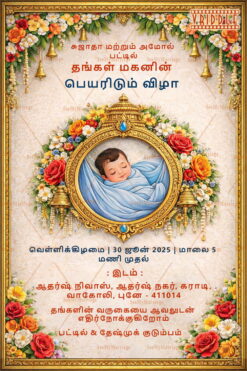
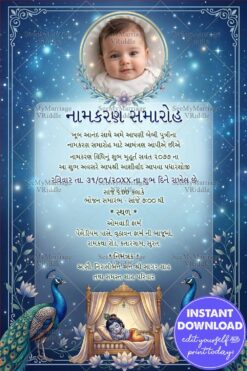
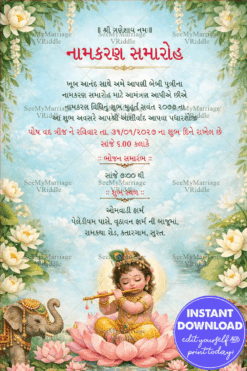
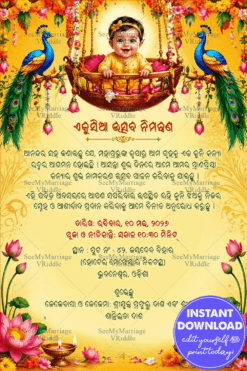
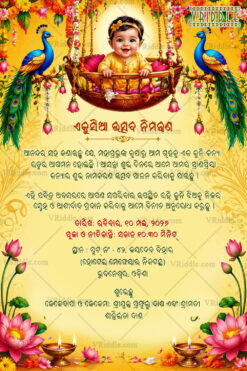
Barsa is the Marathi naming ceremony held 10–12 days after a baby's birth. The invitation announces the baby's name to family and community, with details of date, time, location, and any rituals planned.
Namkaran
Seemantham
Valaikappu
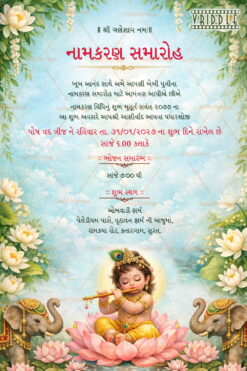
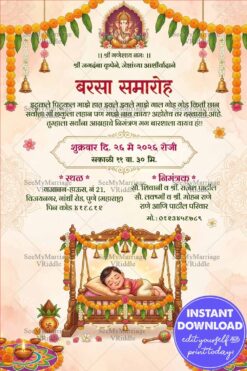
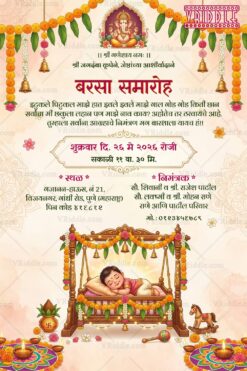
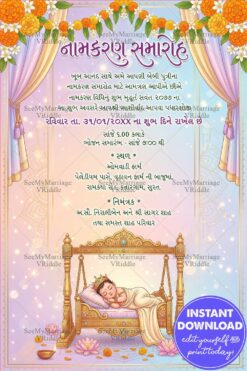
About Barsa
Barsa, also called Barsa Samaroh, is a Marathi Hindu naming ceremony performed in the first two weeks after a child's birth. The ritual traditionally involves the mother, father, maternal grandmother, and priest. The ceremony includes prayers, blessing the child's name, and often a feast for extended family and guests. The invitation must clearly state the baby's name (revealed during the ceremony), the date and time of the gathering, venue address, and whether specific rituals like cradle ceremony (lullaby singing) or food offerings will take place. Regional variations exist: in other parts of India, similar naming ceremonies are called Namkaran (Hindi/Sanskrit), Seemantham (Telugu), Valaikappu (Malayalam), or Dohale Jevan (Marathi, pregnancy blessing). Barsa specifically marks the post-birth announcement and blessing, typically held at home with close family. Decorations often include banana leaves, marigolds, rangoli, and bells—symbols of auspiciousness and new life.
Cultural context
Barsa is rooted in Hindu Marathi tradition, representing the formal introduction of a newborn to the extended family and community. It marks the transition from birth pollution (sutak) to purification and blessing. The ceremony honors Goddess Durga and Lakshmi for safe delivery and the child's wellbeing. Maternal figures play a central role. The ritual reinforces social bonds and celebrates fertility and family continuity.
Also known as
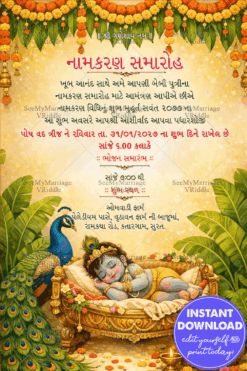
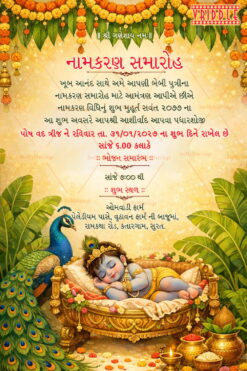
Namkaran (Hindi/Sanskrit) · Seemantham (Telugu) · Valaikappu (Malayalam)